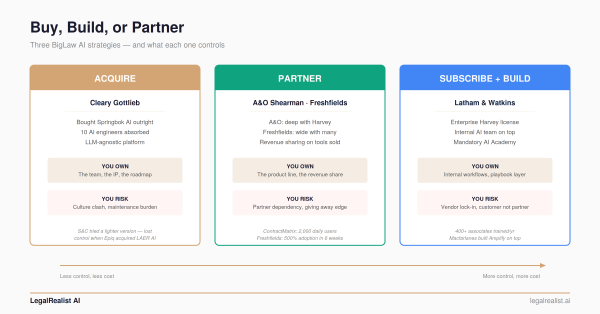
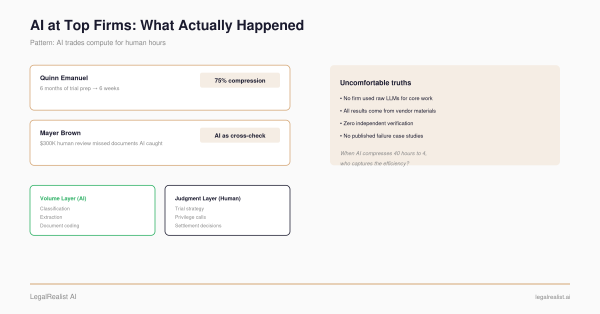
Cleary acquired an AI company. A&O Shearman and Freshfields co-develop with AI labs and share the revenue. Latham subscribes and builds on top. Three strategies, three very different risk profiles.
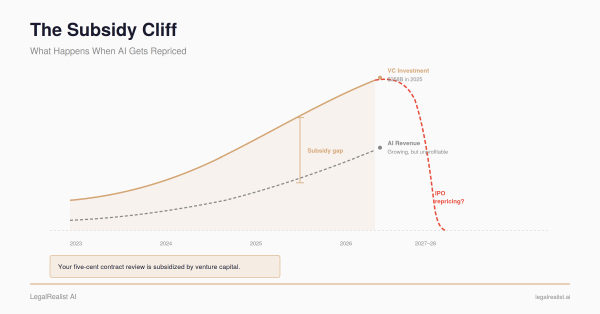
Every major AI lab prices inference below cost. When the venture capital subsidizing your five-cent contract review runs out, your AI economics change whether you're ready or not.
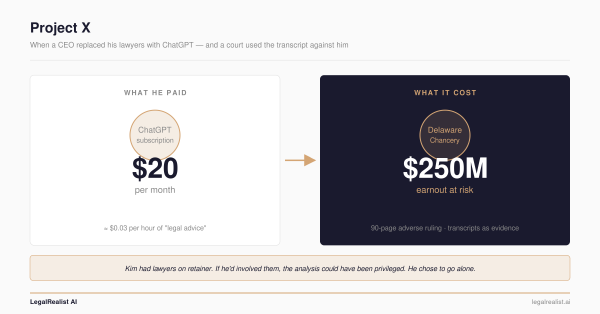
Krafton's CEO bypassed his lawyers and asked ChatGPT how to avoid a $250 million payout. A Delaware court used those chat logs to rule against him – and the case is a warning to every executive treating a chatbot as a confidential advisor.
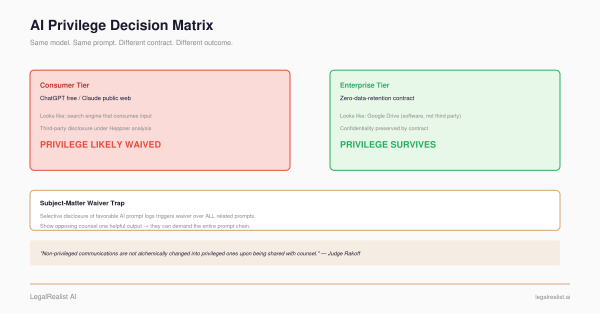
Federal courts are working out how attorney-client privilege and work product apply to AI prompts. The doctrine hasn't changed – *Hickman*, *Upjohn*, and *Kovel* still control. Here's how each case applies the existing elements.
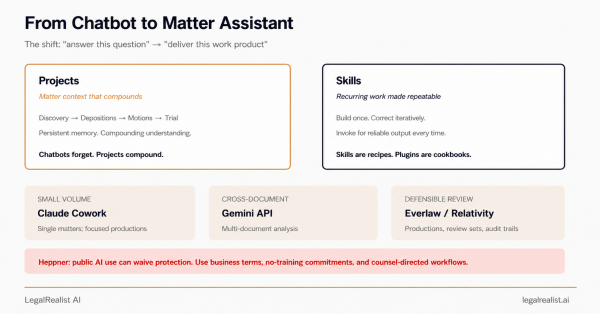
A practical walkthrough of Claude Cowork across the litigation lifecycle – organized around Projects for matters and Skills for recurring tasks – plus the privilege question every firm needs to answer first.
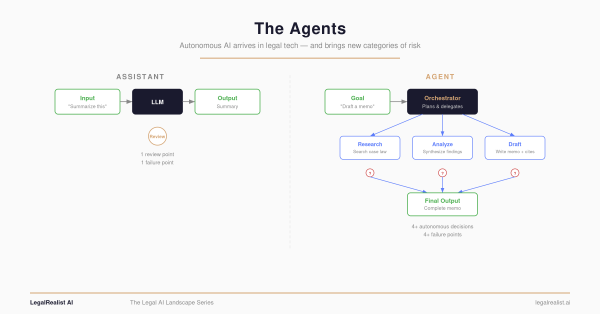
Every major legal AI vendor shipped autonomous agents in Q1 2026. Here's what they actually do, what can go wrong, and why your ethical walls weren't built for this.
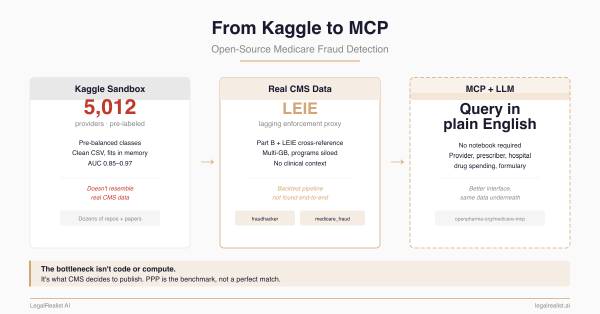
The PPP fraud pipeline worked because the SBA released unusually inspectable data. Medicare's public data is fragmented, de-identified, and missing the features detection needs. Here's what exists on GitHub, where it falls short, and what CMS would need to release to make outside healthcare-fraud analysis more practical.