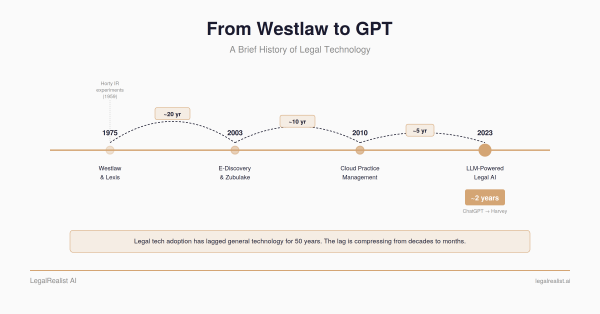
Legal tech adoption has always lagged general technology by 10–20 years. That gap is closing fast – and the next wave won't wait for a committee to finish evaluating it.
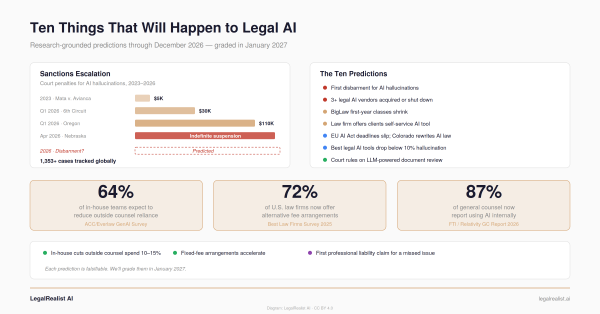
Ten research-grounded predictions for legal AI through the end of 2026 – from the first disbarment for hallucinated citations to the collapse of point-solution vendors to the pricing collision between AI-enabled firms and their clients.
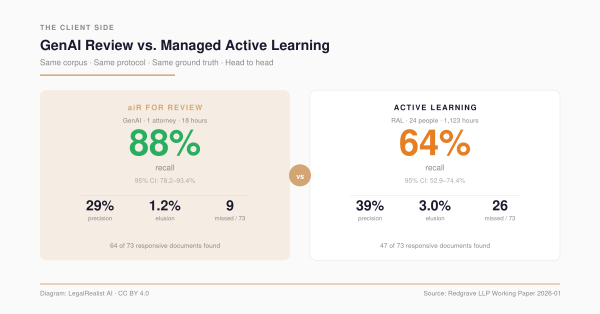
A new working paper ran generative AI document review and a managed active-learning workflow head to head on the same 45,004-document corpus. Same review protocol, same reference labels, same scorecard. The GenAI system won on recall, and the paired test backs it up. The rest of the scorecard – precision, the 62-to-1 effort gap, the population extrapolation – needs more qualification than the headline suggests.
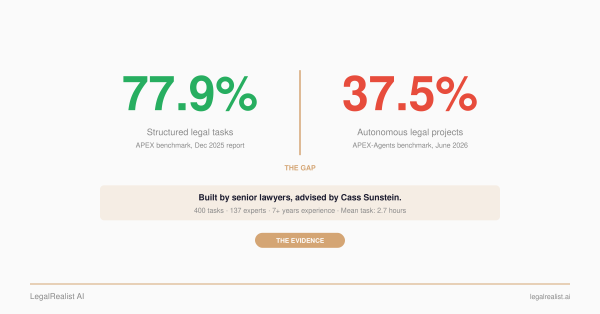
The APEX benchmark – built by Mercor, with tasks authored by BigLaw-experienced lawyers and advised by Cass Sunstein – is the most rigorous test of whether AI can perform real legal work. The answer is more specific than vendors or skeptics suggest.
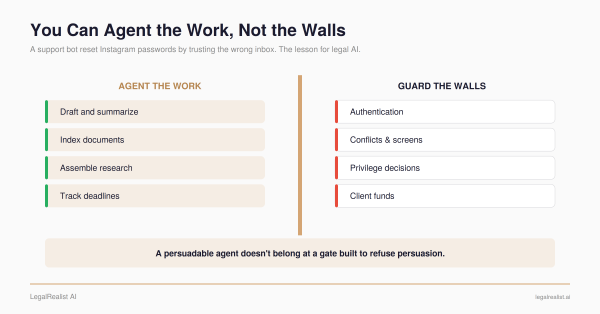
An Instagram account-takeover wave exploited Meta's AI support bot at the password-reset gate. The lesson for law firms: authentication and ethical walls exist to refuse persuasion – exactly what agents are built to do well.
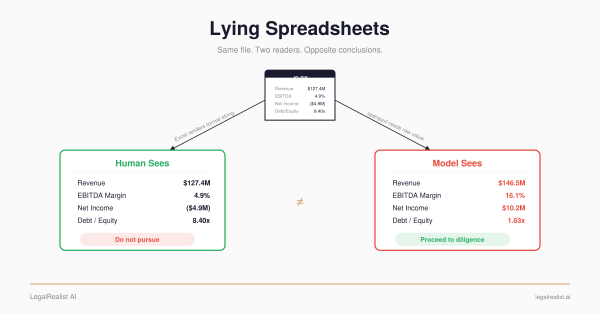
Excel custom number formats let a cell store one value and display another. Every extraction library reads the stored value. Every LLM platform I tested shifted from 'do not pursue' to qualified interest on the same file.
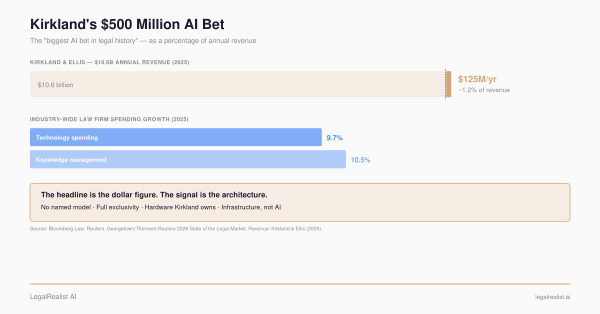
Every headline called Kirkland's $500M commitment an AI bet. The signals in the announcement – no named model, full exclusivity, value-based pricing – point to something different: an infrastructure play that happens to run AI.
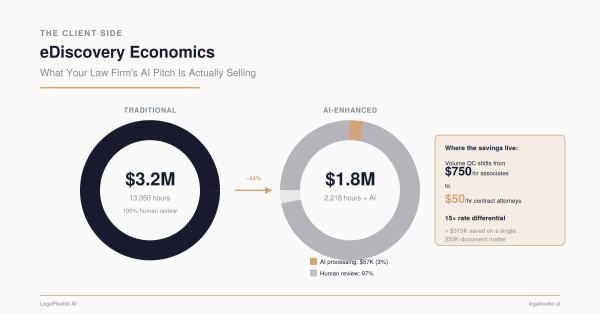
AI processing costs ~3% of an AI-enhanced eDiscovery workflow. The real savings come from restructuring leverage – shifting volume QC from $750/hr associates to $50/hr contract attorneys. Here's the math.
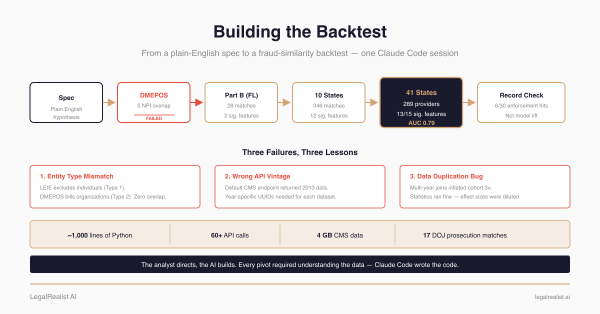
A walkthrough of building a Medicare fraud backtest overnight in Claude Code – from a plain-English spec to 289 matched providers across 41 states, a fraud-similarity model with AUC 0.79, and a manual public-record check of high-scoring peers. Including the three times the pipeline failed, the data duplication bug, and the engineering decisions that shaped the final design.
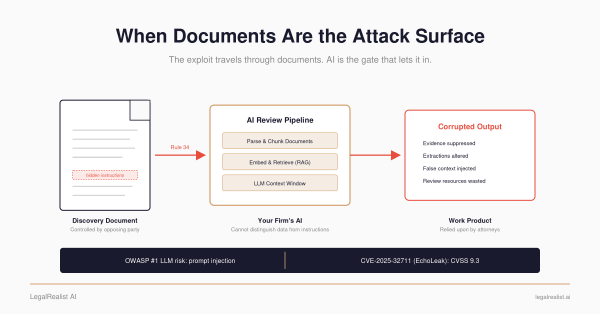
The attack surface isn't AI – it's the documents AI processes. Prompt injection in discovery, adversarial inputs delivered through Rule 34 productions, and the cybersecurity gaps firms create by piping untrusted content through LLM pipelines.