
Recent
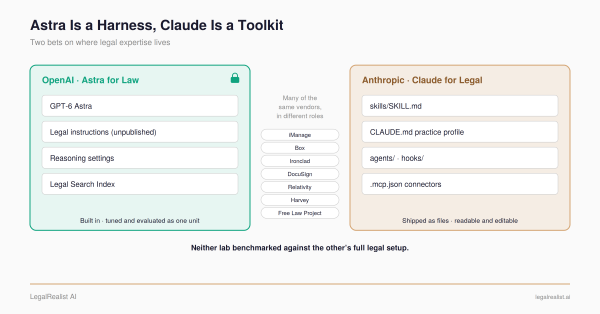
Astra Is a Harness, Claude Is a Toolkit: Two Bets on Where Legal Expertise Lives
OpenAI's Astra for Law and Anthropic's Claude for Legal work with many of the same legal vendors, but OpenAI builds the legal knowledge into the harness while Anthropic ships it as skills and connectors you can edit, and neither vendor compared itself to the other's real setup.
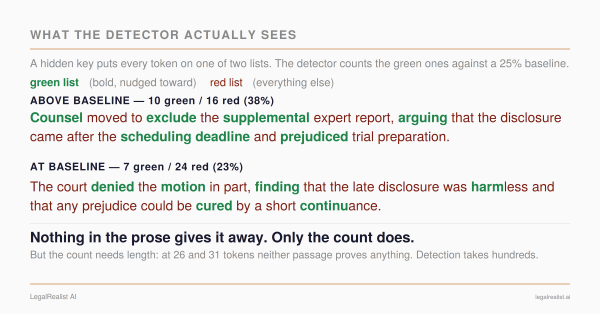
Detectable as AI-Generated
Two statutes now require providers to mark AI-generated output so it can be detected. Five papers published since 2024 show how little of that mark survives contact with an adversary – and how cheaply the secret behind it comes back.
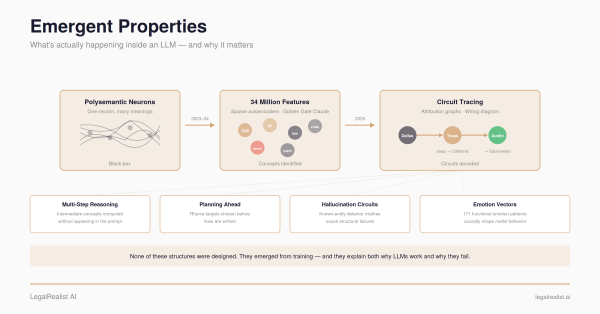
Emergent Properties
What's actually happening inside an LLM – and why the answer is stranger, and more consequential, than either side of the debate expected
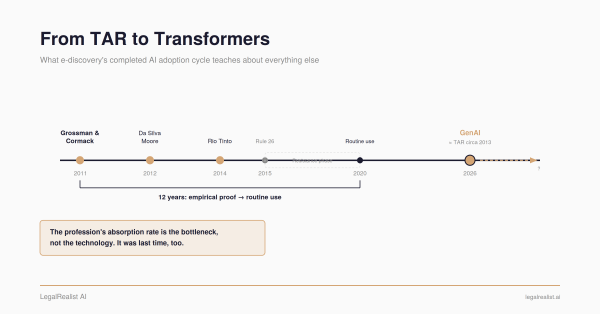
From TAR to Transformers
·
13 mins
E-discovery is the legal profession's only completed AI adoption cycle – and its lessons are the closest thing to a playbook for what comes next
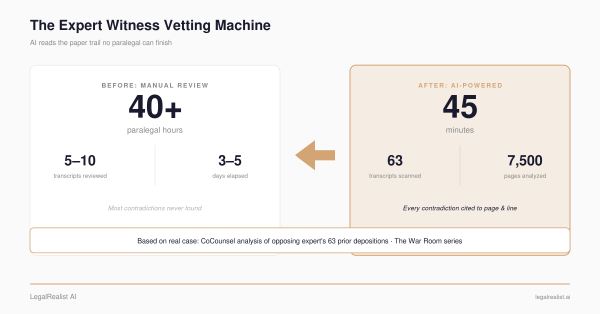
The Expert Witness Vetting Machine
Every expert witness leaves a career-long paper trail. AI can now read all of it – 63 deposition transcripts, hundreds of publications, every Daubert challenge – in minutes instead of weeks.
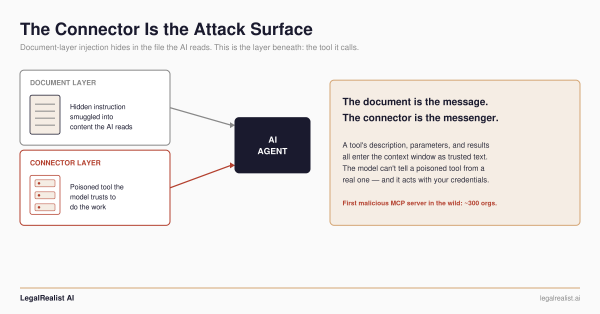
The Connector Is the Attack Surface
The first malicious MCP server in the wild BCC'd every email to its author. A poisoned WhatsApp connector showed how one approved tool can siphon another connector's data. When a firm wires AI agents into its document system, the plumbing – not the document – is the new attack surface.
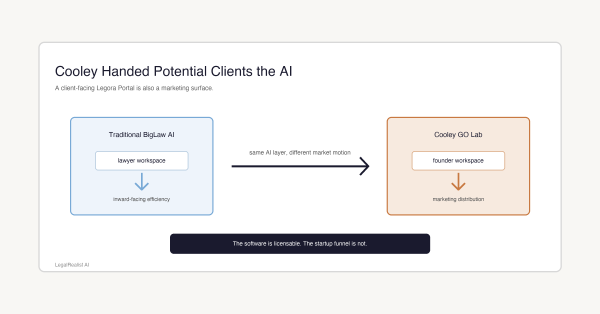
Cooley Handed Potential Clients the AI
Every firm in this series pointed its AI at its own lawyers. Cooley pointed it at potential clients – handing Y Combinator founders an AI tool that doubles as marketing and relationship capture. A look at why the move fits Cooley's franchise, and which firms can actually copy it.
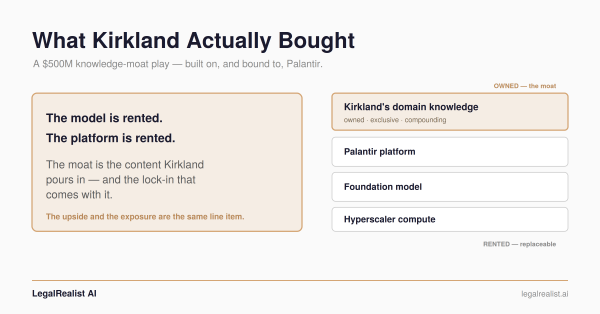
What Kirkland Actually Bought
·
10 mins
Kirkland's $500M has a name: Palantir. The deal is a knowledge-moat play – deep in one practice – but it's built on and bound to Palantir, which means the odds ride on Palantir's track record. Here's how it wins and how it breaks.
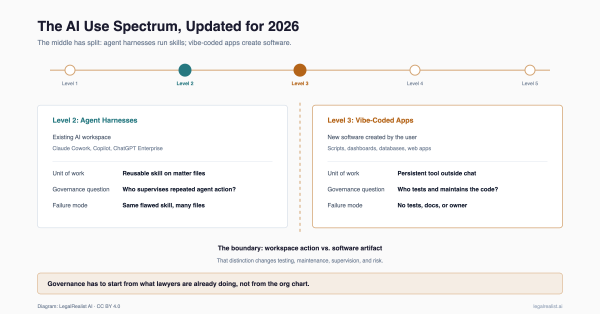
The AI Use Spectrum, Updated for 2026
·
16 mins
From chat windows to agent harnesses to enterprise platforms – a framework for governing AI use as it actually happens
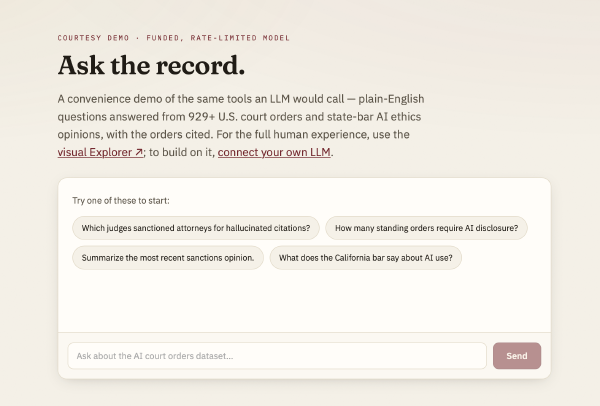
The Same Dataset, Now Your AI Can Read It
·
11 mins
The court orders dataset from the explorer, rebuilt as an API and MCP server so AI assistants can query 929 real orders.